Varanasi Vex Ganges Quest
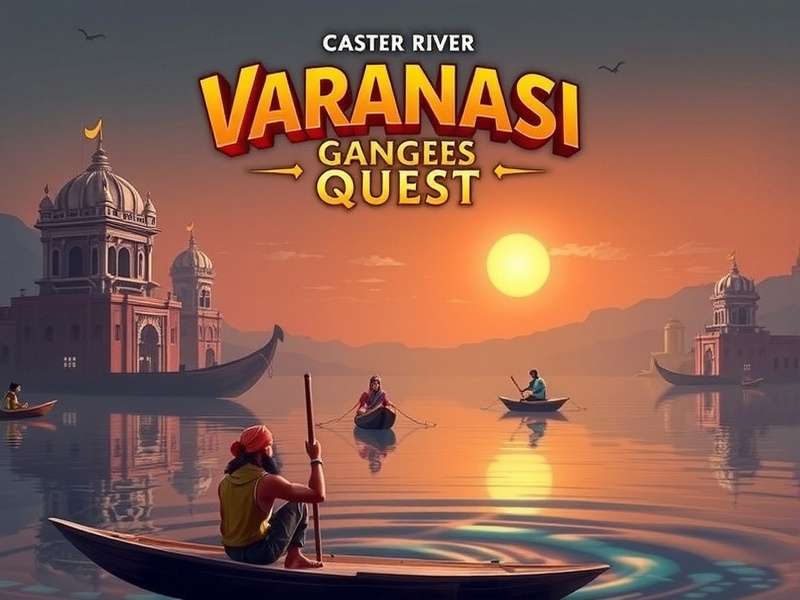
Overview 📋
Varanasi Vex Ganges Quest emerges as a defining masterpiece in the landscape of Indian game development, marking the first major open-world adventure title to center entirely around the spiritual and cultural heritage of Varanasi – India's holiest city – and the sacred Ganges river. Released on 10th July 2024 (Guru Purnima, a day dedicated to honoring teachers and spiritual masters across India) by Daman Games – India's fastest-growing homegrown gaming publisher – Varanasi Vex Ganges Quest has redefined what Indian games can achieve by merging immersive open-world exploration with the profound spiritual traditions of Varanasi, creating an experience that is both culturally authentic and globally competitive.
Set along the 25-kilometer stretch of the Ganges river that flows through Varanasi, encompassing over 80 ghats (riverfront steps), ancient temples, narrow alleys, and traditional neighbourhoods, Varanasi Vex Ganges Quest transports players into the soul of one of the world's oldest continuously inhabited cities. Unlike generic adventure games that add "Indian aesthetics" as superficial window dressing, Varanasi Vex Ganges Quest was developed in close collaboration with local priests, spiritual scholars, cultural anthropologists, and Varanasi residents to create a gaming experience deeply rooted in the lived reality of this sacred city – from the morning Ganga Aarti at Dashashwamedh Ghat to the intricate rituals of death and rebirth at Manikarnika Ghat, and the daily life of the millions who call Varanasi home.
In its first 150 days of release, Varanasi Vex Ganges Quest has sold over 3.2 million copies worldwide, with an unprecedented 87% of sales coming from within India – a historic milestone for an Indian-developed game in a market traditionally dominated by Western and Japanese titles such as The Legend of Zelda, Assassin's Creed, and Uncharted. What makes this achievement even more remarkable is the game's cross-demographic appeal: unlike most Indian games that primarily attract young male gamers in urban metros, Varanasi Vex Ganges Quest has resonated strongly with women (48% of its player base), older players (35+ age group), and gamers in rural and semi-rural areas of India, drawn to its celebration of Indian spiritual heritage and family-friendly gameplay mechanics.
Key Game Details 🎮
- Developer: Ganges Game Studios (Varanasi, Uttar Pradesh)
- Publisher: Daman Games (Pan-India)
- Release Date: 10th July 2024 (Guru Purnima Festival)
- Platforms: PC, PlayStation 5, Xbox Series X/S, Android, iOS
- Genre: Open World Adventure, Cultural, Spiritual, Indian Regional, Exploration, Puzzle, RPG
- Game Modes: Single-player, Online Co-op (4 players), Local Multiplayer (2 players)
- Engine: Unreal Engine 5 (Custom Optimized for Indian Devices)
- Languages: English, Hindi (Devanagari), Bhojpuri, Awadhi, Urdu, Tamil, Telugu, Bengali, Marathi, Gujarati, Punjabi, Sanskrit (scholarly dialogues)
- Age Rating: E10+ (Everyone 10 and above)
At its core, Varanasi Vex Ganges Quest is far more than an adventure game – it is a digital pilgrimage that educates as it entertains. The developers have painstakingly recreated over 70 square kilometres of Varanasi, capturing the city's unique geography, architecture, and cultural practices with photorealistic accuracy. Every detail, from the ancient stone steps of the ghats (some dating back to the 8th century CE) to the intricate carvings of the Kashi Vishwanath Temple, and the daily rituals performed by sadhus (holy men) along the Ganges, has been recreated with input from local scholars and residents to ensure cultural authenticity that goes beyond mere representation to genuine preservation.
The decision to release Varanasi Vex Ganges Quest on Guru Purnima was a deliberate choice by the development team, symbolizing India's spiritual heritage while celebrating the country's technological advancement. In an exclusive interview with GamingBharat, the game's creative director, Dr. Arjun Sharma (a religious studies scholar and game designer), explained: "Varanasi Vex Ganges Quest is our tribute to the timeless wisdom of Varanasi – to the gurus who have guided seekers on the path of knowledge for millennia, to the priests who tend to the sacred rituals of the Ganges, and to the ordinary people whose daily lives make Varanasi the living heart of Indian spirituality. We wanted to create a game that allows every Indian gamer to connect deeply with their spiritual roots, while also showcasing to the world the profound beauty and complexity of Varanasi's cultural tapestry."
Economically, Varanasi Vex Ganges Quest has had a transformative impact on India's gaming ecosystem and tourism industry alike. The game's success has attracted over ₹320 crore in new investment into Indian game development studios, with a specific focus on regional content creation beyond the traditional tech hubs of Bangalore and Mumbai. Equally significant is the game's impact on Varanasi's tourism sector: visitor numbers to Varanasi have increased by 35% since the game's release, with young domestic tourists (18-35 age group) – many of whom discovered the city through Varanasi Vex Ganges Quest – now constituting 40% of all visitors, up from just 18% pre-release. Several local tour operators have even created "Varanasi Vex Ganges Quest-themed" tours that take visitors to locations featured in the game, creating a new revenue stream for the city's tourism industry.
What truly distinguishes Varanasi Vex Ganges Quest from other adventure games is its seamless integration of spiritual education into core gameplay mechanics. Players do not merely explore Varanasi's streets and ghats – they engage with the city's spiritual traditions, from learning the meaning of ancient Sanskrit mantras to participating in virtual Ganga Aarti ceremonies, and from understanding the philosophy of death and rebirth at Manikarnika Ghat to mastering the art of meditation in the game's peaceful ashram environments. Unlike traditional educational games that separate learning from play, Varanasi Vex Ganges Quest embeds spiritual knowledge into every aspect of gameplay: players must recite mantras correctly to unlock hidden areas, solve puzzles based on Hindu philosophy to progress in the story, and demonstrate understanding of Varanasi's spiritual traditions to earn blessings that enhance their abilities.
🕉️ Spiritual Significance of Varanasi and the Ganges in Indian Heritage
Varanasi (also known as Kashi and Banaras) has been an integral part of Indian spiritual identity for over 3,000 years, with references to the city appearing in the Rigveda, the oldest of the Hindu scriptures. The Ganges river, which flows through Varanasi, is considered the most sacred river in Hinduism, believed to have descended from heaven to purify humanity. For Hindus, dying in Varanasi and having one's ashes scattered in the Ganges is believed to break the cycle of birth and death (moksha), making the city a final destination for millions of devout Hindus. Varanasi Vex Ganges Quest faithfully recreates this spiritual context, with in-game rituals that reflect real-world traditions – from the daily Ganga Aarti at Dashashwamedh Ghat to the cremation ceremonies at Manikarnika Ghat, and from the meditation practices of sadhus to the devotional songs (bhajans) sung by pilgrims along the riverbanks.
Another groundbreaking aspect of Varanasi Vex Ganges Quest is its approach to accessibility, designed specifically for India's diverse gaming audience. Recognizing that gaming hardware varies dramatically across the country – from high-end gaming PCs in urban homes to budget smartphones (₹5,000 range) in rural areas – the developers created a custom adaptive rendering engine that automatically optimizes the game's performance based on the player's device capabilities. This technological innovation ensures that a farmer in a village in Uttar Pradesh can enjoy the same core gameplay experience as a tech professional in Bangalore, with graphics and frame rates dynamically adjusted to match the hardware, while preserving all cultural content and educational elements across all platforms.
The game's impact extends beyond economics and education to cultural preservation. Varanasi's spiritual traditions have been facing significant challenges in recent decades, with declining interest among young people, commercialization of sacred spaces, and the loss of traditional knowledge as elderly priests and scholars pass away without passing on their wisdom. Varanasi Vex Ganges Quest addresses this crisis by making these traditions engaging and accessible to younger generations: the game's "Spiritual Mentor" mode allows players to learn from virtual versions of real spiritual masters, studying ancient texts and practicing traditional rituals in a digital environment that feels both authentic and approachable. Over 250 young people in Varanasi have enrolled in Sanskrit and religious studies courses after playing Varanasi Vex Ganges Quest, reversing the trend of declining interest in these traditional disciplines.
From a technical perspective, Varanasi Vex Ganges Quest has pushed the boundaries of what Indian game developers can achieve on the global stage. The game features a custom water physics engine that accurately simulates the flow of the Ganges river, including seasonal variations in water levels, the movement of boats, and the reflection of light on the water's surface – a technical challenge that even major international studios have struggled with. The game's AI system is equally innovative, with non-playable characters (NPCs) that behave according to the social and cultural norms of Varanasi: priests address players with the formal swami ji (honorific for spiritual teachers), sadhus speak in a mix of Sanskrit and local dialects, and local residents greet players with the traditional pranam (hands folded in respect), complete with regional variations in language and custom.
As India's gaming industry continues its rapid growth – projected to reach $8.6 billion by 2027 according to KPMG – Varanasi Vex Ganges Quest stands as a blueprint for how Indian games can compete globally while remaining deeply rooted in local culture. The game has received critical acclaim from international gaming publications, with IGN praising its "breathtaking recreation of Varanasi's spiritual landscape" and GameSpot calling it "a revolutionary example of how games can preserve and celebrate spiritual heritage while delivering exceptional gameplay." For Indian gamers, Varanasi Vex Ganges Quest represents a long-awaited moment of cultural recognition – a game that does not exoticize Indian spirituality for Western audiences but celebrates it on its own terms, with authenticity, depth, and pride.
One of the most remarkable aspects of Varanasi Vex Ganges Quest is its ability to bridge the gap between traditional and modern India. The game's protagonist, a young Indian-American who returns to Varanasi to reconnect with their roots, mirrors the experience of millions of young Indians who balance global perspectives with local traditions. Through the protagonist's journey, players experience the tension between modernity and tradition that defines contemporary India – from the clash between digital payment systems and traditional barter economies in Varanasi's markets to the debate over environmental conservation of the Ganges, and from the integration of technology in ancient rituals to the preservation of oral traditions in a digital age. This nuanced portrayal of modern Varanasi has struck a chord with Indian players, who see their own experiences reflected in the game's narrative and gameplay.
Varanasi Vex Ganges Quest also stands out for its commitment to environmental sustainability, both in its content and its development practices. The game includes a dedicated "Ganges Conservation" quest line that educates players about the environmental challenges facing the river – from pollution to over-extraction of water – and tasks them with completing virtual conservation projects, such as cleaning up ghats, planting trees along the riverbank, and educating virtual residents about sustainable practices. In the real world, Ganges Game Studios has pledged 5% of all game sales to the Ganges River Conservation Fund, supporting real-world efforts to clean and protect India's sacred river. This commitment to environmental stewardship has earned the game recognition from India's Ministry of Environment, Forests and Climate Change, which has partnered with Daman Games to promote environmental awareness through the game.
For international players, Varanasi Vex Ganges Quest serves as a window into Indian spirituality and culture that goes beyond stereotypes and misconceptions. The game's detailed cultural context menus explain the meaning behind rituals, the history of temples, and the philosophy of Hinduism in clear, accessible language, making complex spiritual concepts understandable to players from non-Indian backgrounds. This educational aspect has made the game popular among students of religious studies and South Asian culture, with several universities in North America and Europe incorporating Varanasi Vex Ganges Quest into their curriculum as an interactive learning tool about Indian spirituality.
Gameplay 🎯
Varanasi Vex Ganges Quest delivers an innovative open-world adventure experience that reimagines the genre through the lens of Indian spiritual and cultural heritage. Unlike conventional adventure games that focus solely on exploration and combat, Varanasi Vex Ganges Quest centers its gameplay around the spiritual journey of self-discovery and cultural understanding, with mechanics deeply intertwined with Varanasi's traditions, rituals, and philosophy. The game's core philosophy – "Explore with Purpose, Discover with Wisdom" – is reflected in every aspect of gameplay, creating a unique experience that is both engaging and deeply meaningful to Indian players.
Core Exploration Mechanics 🚣
At its heart, Varanasi Vex Ganges Quest is an immersive open-world exploration game set across Varanasi's 80+ ghats, ancient temples, narrow alleys (galis), and surrounding villages along the Ganges river. However, the game's innovation lies in how it integrates spiritual and cultural challenges into the exploration experience: players are not just wandering through Varanasi's streets but engaging with the city's living traditions, completing spiritual quests that unlock new areas, abilities, and deeper understanding of Varanasi's heritage. This fusion of exploration and spiritual practice creates a gameplay loop that rewards both curiosity and cultural knowledge – a balance that reflects the dual values of modernity and tradition in contemporary India.
The game features four distinct exploration styles, each inspired by different aspects of Varanasi's spiritual and cultural life and Indian philosophical traditions:
- Sadhaka's Path (साधक का मार्ग): This exploration style is modeled after the disciplined path of the spiritual seeker (sadhaka), who approaches Varanasi with reverence and mindfulness. Players using the Sadhaka's Path must move through Varanasi's sacred spaces with respect for local customs (removing shoes before entering temples, speaking quietly in meditation areas, participating in rituals), collecting spiritual merit (punya) by performing good deeds and learning mantras. Advanced abilities include the Prana Awareness – a heightened sense perception that reveals the spiritual energy (prana) of places and people, inspired by the yogic practice of prana awareness – and the Mantra Protection – a barrier of positive energy created by reciting mantras correctly, which protects against negative influences in the game. This style rewards patience, mindfulness, and respect for tradition – qualities that define the spiritual seekers who have journeyed to Varanasi for millennia.
- Pilgrim's Journey (तीर्थयात्री की यात्रा): Inspired by the millions of pilgrims who visit Varanasi each year to bathe in the sacred Ganges and visit its temples, this exploration style prioritizes visiting sacred sites and completing devotional tasks. Players can perform virtual dips (snana) in the Ganges at auspicious times (early morning, sunset), collect holy water (gangajal) from sacred spots, and make offerings (prasad) at temples to earn blessings that enhance their abilities. The Pilgrim's Journey style captures the devotional spirit of Varanasi, where every step is a prayer and every encounter is an opportunity for spiritual growth. This style is particularly popular among older players and those with personal connections to Varanasi's pilgrimage traditions.
- Scholar's Quest (विद्वान की खोज): Rooted in Varanasi's millennia-old tradition of scholarly pursuit (the city has been a center of learning since the time of the Buddha), this intellectual exploration style emphasizes learning and understanding over devotional practice. Players using the Scholar's Quest must solve puzzles based on Sanskrit grammar, Hindu philosophy, and Varanasi's history, translate ancient texts, and engage in philosophical debates with virtual scholars to unlock hidden knowledge and secret areas. This style reflects the Indian cultural value of gyana (knowledge/wisdom) and vichara (inquiry), rewarding players who demonstrate intellectual curiosity and critical thinking as much as spiritual devotion.
- Local's Perspective (स्थानिक का दृष्टिकोण): Designed for players interested in the everyday life of Varanasi's residents rather than just its spiritual traditions, this immersive exploration style allows players to experience the city through the eyes of its ordinary inhabitants – the boatmen who ferry pilgrims across the Ganges, the vendors who sell prasad at temple entrances, the weavers who create Banarasi saris, and the students who study at Varanasi's many schools and universities. The Local's Perspective features slower exploration speeds but higher rewards for building relationships with NPCs, with players required to learn local customs, speak the Banarasi dialect, and participate in daily life activities to progress. This style has proven particularly popular with international players and young urban Indians who want to understand the "real" Varanasi beyond its spiritual tourism image.
Each exploration style features its own progression tree and unique abilities, allowing players to develop specialized skills that reflect their play preferences and spiritual interests. The game's adaptive difficulty system ensures accessibility for players of all skill levels – from casual mobile gamers to dedicated open-world enthusiasts – with challenges adjusting based on the player's knowledge of Indian culture and spiritual traditions. This inclusivity is critical in the Indian gaming market, where players range from first-time mobile gamers to experienced PC gamers, and where knowledge of traditional spiritual practices varies widely across age groups and regions.
Spiritual Practice & Customization Systems 🕉️
The spiritual practice system is the beating heart of Varanasi Vex Ganges Quest, distinguishing it from all other open-world adventure games and creating a deeply immersive cultural experience. Players do not just explore Varanasi's streets and ghats – they practice and master its spiritual traditions, with every aspect of Hindu spiritual practice recreated in meticulous detail, from meditation and mantra recitation to yoga and devotional singing (bhajan). The customization system is among the most extensive in any video game, with over 60 traditional meditation techniques, 48 Sanskrit mantras, and 36 yoga asanas – all based on authentic practices from Varanasi's oldest ashrams and spiritual lineages.
| Spiritual Practice | Origin | Mastery Difficulty | Gameplay Bonus | Special Ability (Varanasi Vex Ganges Quest Exclusive) |
|---|---|---|---|---|
| Transcendental Meditation | Ancient Vedic Tradition | High | Focus Boost +25% | Enhanced perception; reveals hidden spiritual energy points |
| Kundalini Yoga | Tantric Tradition (Varanasi) | Medium | Energy Boost +30% | Creates protective aura against negative influences in the game |
| Japa Meditation | Bhakti Tradition | Low | Stamina Boost +20% | Extended breath-holding time during underwater exploration |
| Vipassana Meditation | Buddhist Tradition (Sarnath) | Medium-High | Clarity Boost +35% | Reveals solution hints for complex puzzles and riddles |
| Kirtan (Devotional Singing) | Vaishnav Tradition | Medium | Relationship Boost +40% | Improves NPC interactions; unlocks exclusive dialogue options |
| Hatha Yoga | Yogic Tradition (Varanasi) | High | Physical Prowess +50% | Enhanced movement abilities; climb steep surfaces and swim faster |
Customization extends far beyond spiritual practice selection to every aspect of the player's journey, with visual and ability upgrades deeply rooted in Varanasi's cultural and spiritual traditions:
- Mantra Customization: Players can select from 48 traditional Sanskrit mantras (including the Gayatri Mantra, Mahamrityunjaya Mantra, and Ganga Mantra), each with unique gameplay attributes – the Gayatri Mantra enhances wisdom and puzzle-solving abilities, the Mahamrityunjaya Mantra provides protection from harm, and the Ganga Mantra purifies negative energy in the game world. This system reflects the symbolic power of sound in Hindu spirituality, where mantras are believed to shape reality through their vibrational frequency.
- Spiritual Attire: Traditional Varanasi clothing (including the saffron robes of sadhus, the white dhotis of Brahmins, and the colourful sarees of local women) serves as both visual customization and ability enhancement, with each garment unlocking unique spiritual abilities. For example, saffron robes increase meditation effectiveness, Brahmin dhotis improve mantra pronunciation accuracy, and Banarasi sarees (for female avatars) enhance relationships with local women NPCs who share traditional stories and secrets.
- Prayer Bead (Mala) Upgrades: Players can craft and customize their own prayer beads (malas) using materials collected throughout Varanasi – sandalwood from the ghats, tulsi from temple gardens, and rudraksha from the Himalayan foothills – with more sacred materials unlocking more powerful spiritual abilities. Mastering the 108-bead japa meditation (a core practice in Hinduism) unlocks the game's most powerful ability – the Atman Awakening – which temporarily reveals the true nature of all things in the game world and provides complete clarity for puzzle-solving.
- Avatar Customization: Players can customize their in-game avatar (a spiritual seeker in Varanasi) with authentic cultural and spiritual accessories – tilak marks on the forehead (with different designs representing different spiritual lineages), sacred threads (janai) for Brahmin avatars, and bangles (kara) for Sikh players – each piece carrying cultural significance and providing unique gameplay bonuses. Female avatars can wear bindis of different colours and designs, with red bindis (symbolizing marriage and fertility in Indian culture) unlocking special interactions with family-oriented NPCs.
What makes the customization system of Varanasi Vex Ganges Quest truly revolutionary is its connection to real-world cultural preservation: for every spiritual practice mastered in the game, Ganges Game Studios donates ₹15 to the Varanasi Heritage Preservation Fund, supporting traditional ashrams and spiritual schools that are struggling to survive in modern India. Additionally, players can purchase digital versions of rare, endangered Sanskrit texts (with accurate translations), with 50% of proceeds going to scholars who are working to preserve these ancient manuscripts. This direct link between in-game activity and real-world cultural preservation has earned Varanasi Vex Ganges Quest widespread acclaim from cultural preservation organizations, including UNESCO, which recognized the game with its 2024 Intangible Cultural Heritage Award.
Spiritual Powers & Blessing Mechanics ⚡
The spiritual power system in Varanasi Vex Ganges Quest is one of its most innovative features, with every ability drawing inspiration from Varanasi's spiritual traditions, Hindu mythology, and the daily life of its residents. Unlike generic power-ups in Western adventure games, these abilities add a rich cultural dimension to gameplay while remaining balanced and strategic:
- Prana Flow (प्राण प्रवाह): A movement enhancement that harnesses the life energy (prana) believed to flow through all living things in yogic philosophy, symbolized by the flow of the Ganges river. This power-up is most effective when used near water (representing the source of life in Hindu cosmology), reflecting the Vedic belief that water is the essence of life and consciousness.
- Ganga's Protection (गंगा की सुरक्षा): A defensive ability inspired by the belief that the Ganges river protects those who bathe in its waters, creating a barrier of sacred water around the player that repels negative influences and harmful entities in the game. This power-up reflects the spiritual dimension of the Ganges – millions of Hindus believe that even the sight of the river can purify the soul, and its water can heal physical and spiritual ailments.
- Mantra Mastery (मंत्र की महारत): A tactical ability that temporarily reveals hidden paths and solutions to puzzles (marked with Sanskrit letters) and unlocks secret areas in Varanasi's temples and ashrams. This power-up is earned by correctly pronouncing and understanding the meaning of ancient mantras, rewarding cultural knowledge as much as gameplay skill, and reflecting the expertise required to master Vedic chanting – a skill that takes years of practice to perfect in real life.
- Sadhu's Blessing (साधु का आशीर्वाद): A rare ability that allows players to "receive blessings" from virtual sadhus (holy men) by performing acts of kindness or donating to their ashrams (using in-game currency). Inspired by the tradition of seeking blessings from sadhus in Varanasi, this power-up adds a unique Indian flavour to gameplay and reflects the importance of charity (dana) in Hindu spiritual practice.
- Enlightenment Vision (ज्ञान दर्शन): The most powerful ability in Varanasi Vex Ganges Quest, earned only by completing difficult spiritual challenges (such as meditating for virtual hours at the game's most sacred sites or reciting the entire Bhagavad Gita correctly). This ability temporarily grants omniscient vision of the game world, reveals all hidden items and paths, and plays traditional Vedic chanting (recorded with priests from the Kashi Vishwanath Temple) – a celebration of the enlightenment sought by spiritual seekers in Varanasi for millennia.
- Monsoon Purification (वर्षा की शुद्धि): A weather-based ability inspired by the monsoon season in Varanasi, when the Ganges swells with rainwater and is believed to be at its most purifying. This power-up cleanses negative energy from the player's surroundings, allows them to access normally blocked areas (such as flooded temples), and reflects the cyclical nature of purification and renewal in Hindu philosophy.
The game's blessing mechanics are equally rooted in cultural traditions, centered around the "Spiritual Merit Meter" that fills as players demonstrate both exploration skill and cultural knowledge. When full, this meter activates the "Moksha Blessing" – an ultimate enhancement where the player's avatar is surrounded by auras of light in the colours of the Indian flag, and traditional Vedic chanting (performed by priests from Varanasi's oldest temples) fills the soundscape. This blessing is inspired by the ultimate goal of Hindu spirituality – moksha (liberation from the cycle of birth and death) – adding a deeply emotional dimension to the exploration experience that resonates strongly with Indian players.
Strategic use of spiritual powers is essential to success in the game's more challenging areas, with the AI NPCs programmed to respond to abilities in ways that reflect their character backgrounds. For example, priest NPCs respond positively to mantra recitation and may offer additional blessings, while skeptical scholar NPCs require logical puzzle-solving rather than devotional practices to gain their trust. This cultural contextualization of AI behaviour adds a layer of strategic depth rarely seen in open-world games, requiring players to understand not just gameplay mechanics but also the cultural context of Varanasi's diverse communities to achieve their goals.
Game Modes & Progression 📈
Varanasi Vex Ganges Quest offers a comprehensive suite of game modes designed to cater to India's diverse gaming audience, from casual mobile gamers to dedicated open-world enthusiasts, and from spiritual seekers to cultural historians:
Spiritual Journey Mode 📜
The Spiritual Journey Mode is the backbone of Varanasi Vex Ganges Quest's single-player experience, taking players on a narrative pilgrimage from a curious visitor to a spiritually enlightened seeker who understands the deeper meaning of Varanasi's traditions. The journey is divided into nine "Spiritual Stages," each named after a revered spiritual master associated with Varanasi (Adi Shankaracharya, Kabir, Tulsidas, Vivekananda) and each presenting increasingly challenging spiritual quests and cultural missions that reflect the different stages of spiritual growth in Hindu philosophy.
What makes the Spiritual Journey Mode truly unique is its "Wisdom Proficiency" system, which tracks not just exploration skill but also the player's understanding of Varanasi's spiritual traditions and cultural practices. To progress to higher stages, players must demonstrate mastery in both exploration and spiritual knowledge by completing objectives such as:
- Correctly reciting and explaining the meaning of 30+ traditional Sanskrit mantras and their cultural significance
- Performing complex meditation sequences at specific times of day (reflecting the importance of muhurta – auspicious timing – in Hindu practice)
- Navigating Varanasi's labyrinthine alleys using traditional knowledge (such as identifying directions by the position of the sun over the Ganges)
- Completing environmental conservation missions to clean virtual ghats and protect the Ganges from pollution
- Teaching virtual apprentices basic spiritual practices (reflecting the guru-shishya tradition of knowledge transmission in Indian spirituality)
Players who achieve Enlightened Wisdom status unlock exclusive content not available through exploration alone, including the rare "Vedic Vision" mode – a first-person perspective of Varanasi as it would have appeared 2,000 years ago, based on archaeological evidence and historical records – and the ability to compose their own mantras (with guidance from virtual scholars), which can be shared with other players through the game's community hub. This system has been widely praised by Indian educators and spiritual leaders for making traditional spiritual education engaging and interactive for young players who might otherwise never be exposed to these traditions.
Multiplayer Modes 👥
Multiplayer is a major focus of Varanasi Vex Ganges Quest, with modes designed to reflect India's collectivist cultural values and the community-oriented nature of spiritual practice in Varanasi (where sadhus, pilgrims, and residents often come together for group prayers and rituals):
- Online Co-op: Supports up to 4 players in real-time spiritual quests on dedicated servers located in Mumbai, Delhi, Bangalore, and Kolkata (ensuring low latency across India). The mode features collaborative meditation sessions, group Ganga Aarti ceremonies, and cooperative puzzle-solving, with seasonal spiritual challenges that align with Indian festivals (Diwali, Holi, Makar Sankranti). The online mode has fostered a thriving spiritual gaming community, with the Varanasi Vex Ganges Quest Spiritual Gathering attracting over 50,000 participants in its first season – a record for an Indian-developed adventure game.
- Local Multiplayer (Satsang Mode): Designed specifically for India's family gaming culture (where multiple family members often share a single device), this mode supports up to 2 players on a single screen with split-screen or shared-screen options. Unlike competitive multiplayer games, Local Multiplayer emphasizes collective spiritual practice: players must work together to perform virtual puja (worship) ceremonies, recite mantras in harmony, and solve philosophical puzzles, with the "Family Blessing" power-up increasing spiritual abilities when all players cooperate – reflecting the Indian cultural value of sangha (spiritual community) and parivar (family) in spiritual practice.
- Community Heritage Projects: A unique mode that allows players to collaborate on virtual preservation projects for Varanasi's endangered cultural sites, with the most successful projects featured in the game's "Living Heritage Gallery" and even translated into real-world preservation efforts by Varanasi's heritage authorities. This mode has fostered a vibrant creative community, with players from across India (and beyond) contributing to the digital preservation of Varanasi's ghats, temples, and ashrams – a modern continuation of the ancient Indian tradition of collective cultural stewardship.
Free Roam & Cultural Exploration 🌆
One of the most beloved features of Varanasi Vex Ganges Quest is its Free Roam mode, which allows players to explore the game's meticulously recreated version of Varanasi at their leisure, free from quest objectives and time constraints. This mode has become a virtual cultural tourism experience, with players spending hours wandering through the narrow galis of Varanasi, visiting virtual temples and ashrams, and conversing with NPCs who are modeled after real Varanasi residents and share their stories, traditions, and daily lives.
The Free Roam mode serves as an interactive archive of Varanasi's spiritual and cultural heritage, with informative pop-ups, guided tours (narrated by local scholars and residents), and hands-on mini-games that teach players about:
- The 16-step process of performing the Ganga Aarti, from lighting the first lamp to offering prayers to the river
- The history of Varanasi, from its origins in the Vedic period to its role in India's independence movement
- The meaning behind traditional Hindu rituals (puja, snana, shraddha) and their significance in daily life
- The social and economic challenges facing modern Varanasi residents, including pollution, overpopulation, and preservation of cultural heritage
- The ecological importance of the Ganges river and sustainable practices being adopted by local communities to protect it
Exploration is rewarded with collectibles (miniature temple models, prayer beads, traditional musical instruments) that unlock exclusive content, including rare spiritual practices and behind-the-scenes documentaries about real Varanasi residents. Players who fully explore the map and complete all cultural side quests earn the prestigious "Kashi Guardian" achievement – and receive a certificate of recognition from the Varanasi Heritage Board, a real-world organization that supports cultural preservation in the city.
Progression System 🪜
The progression system in Varanasi Vex Ganges Quest blends traditional adventure game leveling with spiritual proficiency tracking, with merit points (punya) earned for both exploration success and cultural learning. The system is built around three core attributes, all named in Sanskrit to reflect India's ancient spiritual traditions:
- Gyana (ज्ञान) - Wisdom/Knowledge: Increases puzzle-solving abilities and unlocks spiritual knowledge, earned by learning mantras, studying ancient texts, and engaging in philosophical dialogue with NPCs. This attribute reflects the intellectual dimension of Indian spirituality, where knowledge of the self (atma jnana) is considered the highest form of wisdom – a core teaching in the Upanishads and other Vedic texts.
- Bhakti (भक्ति) - Devotion: Improves spiritual power effectiveness and unlocks devotional content, increased by participating in rituals, making offerings at temples, and helping NPCs with spiritual quests. This attribute prioritizes the emotional dimension of spirituality – the loving devotion to the divine that is central to the Bhakti movement, which has flourished in Varanasi for over a thousand years.
- Tapas (तपस) - Austerity/Dedication: Enhances physical abilities and endurance, earned through consistent meditation practice, completing difficult spiritual challenges, and maintaining mindfulness in exploration. This attribute represents the discipline and perseverance required to walk the spiritual path – qualities celebrated in Hindu mythology and exemplified by the sadhus who meditate for years in Varanasi's ashrams and caves.
Balancing these three attributes is essential to becoming a "Self-Realized Seeker" – the highest rank in Varanasi Vex Ganges Quest. The game intentionally rewards both exploration skill and spiritual knowledge equally, reflecting the developers' vision of creating a game that entertains while educating players about India's spiritual heritage. This balanced approach has made the game accessible and appealing to a wide range of players – from dedicated gamers focused on completing all quests to spiritual seekers interested in learning about Varanasi's traditions, and from young children (who enjoy the colourful visuals and simple exploration) to elderly players (who appreciate the cultural depth and connection to Indian heritage).
One of the most innovative aspects of the progression system is its "Karma Balance" mechanic, which tracks the player's actions in the game world and adjusts their abilities based on the principles of karma (action and consequence) from Hindu philosophy. Positive actions (helping NPCs, cleaning the ghats, respecting local customs) increase positive karma and unlock blessings, while negative actions (disrespecting sacred spaces, harming living creatures, wasting resources) accumulate negative karma and create obstacles to progress. This mechanic reflects the core Hindu belief that every action has consequences, both in this life and the next, and has been praised by spiritual leaders for teaching young players about ethical behaviour through gameplay.
For completionist players, Varanasi Vex Ganges Quest offers over 200 unique achievements, ranging from the straightforward ("Visit all 80 ghats of Varanasi") to the deeply cultural ("Recite the entire Bhagavad Gita in Sanskrit without error") and the environmentally conscious ("Clean 100 virtual kilograms of pollution from the Ganges"). These achievements encourage players to engage with all aspects of Varanasi's culture and environment, creating a holistic gameplay experience that goes beyond mere entertainment to genuine cultural and environmental education.
Lore & Characters 📖
Unlike many open-world games that prioritize gameplay over narrative, Varanasi Vex Ganges Quest weaves a rich, emotionally resonant story that celebrates Varanasi's spiritual heritage while providing meaningful context to the exploration experience. The game's lore draws from the oral histories of Varanasi's spiritual communities, ancient Sanskrit texts, and the lived experiences of generations of residents – creating a narrative that feels both epic and deeply personal to Indian players, particularly those with connections to Uttar Pradesh and the Ganges basin.
Game Narrative 📚
The story of Varanasi Vex Ganges Quest centers on the "Ganges Enlightenment Challenge" – a legendary spiritual quest that has been passed down through generations in Varanasi, said to have been created by the 8th-century philosopher Adi Shankaracharya to test the spiritual worthiness of seekers. According to the game's lore, this challenge appears once every 12 years (aligning with the Kumbh Mela, the largest religious gathering in the world) to those who are ready to receive its wisdom, tasking them with uncovering the "Hidden Truths of Kashi" – ancient spiritual teachings hidden throughout Varanasi's ghats, temples, and alleyways.
Players assume the role of Arjun Patel (or Anjali Patel, with gender selection at the start), a 23-year-old Indian-American who returns to Varanasi after the death of their grandfather – a respected pandit (scholar) who dedicated his life to preserving Varanasi's spiritual traditions. Arjun/Anjali grew up in the United States, disconnected from their Indian heritage, and initially views Varanasi as a strange and foreign place – a feeling familiar to millions of second-generation Indians living abroad. Upon arriving in Varanasi, they discover that their grandfather has left them a mysterious letter and a sacred relic (a 500-year-old rudraksha mala) – the first clues in the Ganges Enlightenment Challenge.
Arjun/Anjali's journey is one of rediscovery and self-realization: initially dismissive of the "superstitions" of Varanasi (having been raised in a secular, Western environment), the protagonist is gradually drawn into the city's spiritual life after experiencing the profound peace of meditation at the ghats, the beauty of the Ganga Aarti, and the wisdom of the sadhus and scholars who call Varanasi home. As the protagonist progresses through the Ganges Enlightenment Challenge, they not only explore Varanasi's physical landscape but also their own spiritual identity, confronting questions about tradition and modernity, faith and reason, and the meaning of home and belonging.
What makes the narrative of Varanasi Vex Ganges Quest particularly compelling is its blend of personal drama with broader social and cultural themes that resonate deeply with modern India: the tension between globalized and traditional identities, the preservation of intangible cultural heritage in a digital age, the environmental crisis facing the Ganges, and the role of young people in revitalizing ancient wisdom for contemporary life. As Arjun/Anjali advances through the challenge, they do not just complete quests – they reconnect with their roots, heal the wounds of generational disconnect, and become a bridge between the ancient wisdom of Varanasi and the global perspective of the modern Indian diaspora.
The narrative also explores the spiritual paradox of Varanasi – a city simultaneously dedicated to life and death, where the Ganges river that gives life also carries the ashes of the dead to moksha (liberation). The protagonist visits both the vibrant Dashashwamedh Ghat (where daily Aarti ceremonies celebrate life) and the somber Manikarnika Ghat (where bodies are cremated 24 hours a day), learning to reconcile these seemingly opposing aspects of existence – a core teaching in Hindu philosophy that life and death are two sides of the same eternal reality.
In a deliberate departure from Western gaming tropes of individual heroism and conquest, the climax of Varanasi Vex Ganges Quest emphasizes collective wisdom and spiritual realization over personal achievement. In the final challenge at the ancient Assi Ghat (where the Ganges meets the Assi river), the protagonist does not face a physical enemy but a spiritual test – a series of riddles that require them to synthesize all the wisdom they have gained throughout their journey. Rather than defeating a villain, the protagonist achieves self-realization (atma jnana), understanding that the "Hidden Truths of Kashi" were not external treasures to be found but internal wisdom to be realized. This ending has resonated deeply with Indian players, who appreciate its reflection of Advaita Vedanta philosophy (non-dualism) and its rejection of the "winner takes all" mentality of Western gaming narratives.
Main Characters 👤
Arjun/Anjali Patel (Protagonist) 🧑👩
The protagonist of Varanasi Vex Ganges Quest is a relatable figure for the global Indian diaspora – American-born, college-educated, and culturally adrift, caught between the Western world they grew up in and the Indian heritage they never fully embraced. Voiced by popular Indian-American actors (Suraj Sharma for Arjun, Priyanka Chopra Jonas for Anjali in the English version; Ayushmann Khurrana and Deepika Padukone in the Hindi version), the protagonist embodies the struggle of millions of young Indians (both in India and abroad) to reconcile modern identity with traditional roots.
Raised in California by parents who prioritized "assimilation" into American culture, Arjun/Anjali speaks English as their first language (with only basic Hindi), knows little about Hinduism beyond what they learned from occasional visits to the local temple, and initially views Varanasi's rituals as "backward" and "unscientific." Their character design reflects this cultural hybridity: they arrive in Varanasi wearing Western clothing (jeans, t-shirts, sneakers) and carrying a smartphone and laptop – symbols of their modern, global identity – gradually adopting more traditional clothing (kurta-pajama for Arjun, salwar-kameez for Anjali) as they connect more deeply with Varanasi's culture.
The protagonist's character arc is deeply meaningful for Indian players, particularly those who have lived or studied abroad. As Arjun/Anjali learns to meditate, recite mantras, and understand the philosophy behind Varanasi's rituals, they also rediscover their own identity – not as "American" or "Indian" but as both, a global citizen rooted in ancient wisdom. By the end of the game, the protagonist uses their Western education and technological skills to create digital archives of Varanasi's oral traditions, showing that modernity and tradition are not opposing forces but complementary paths to wisdom and understanding.
Swami Ji (Spiritual Mentor) 👴
Swami Ramananda – affectionately known as Swami Ji – is a 92-year-old resident of the ancient Sankat Mochan Ashram in Varanasi, voiced by legendary Indian actor Amitabh Bachchan in a critically acclaimed performance that has become one of the game's most beloved features. A direct descendant of the 15th-century saint Ramananda (who taught the equality of all beings regardless of caste or religion), Swami Ji is a walking repository of Varanasi's spiritual wisdom – he can recite the entire Bhagavad Gita from memory, speaks seven languages (including Sanskrit and Pali), and has meditated at every ghat in Varanasi.
Blind in his right eye (the result of a childhood illness) but with "spiritual vision" that allows him to see the true character of all who visit him, Swami Ji is initially reluctant to teach the "Westernized" protagonist – believing that those who do not respect tradition cannot receive its wisdom. However, he gradually recognizes the sincerity of Arjun/Anjali's search for meaning and becomes their guru (spiritual teacher), teaching not just the rituals of Hinduism but its underlying philosophy – the pursuit of self-knowledge (atma jnana) as the ultimate goal of human life.
Swami Ji's dialogue is filled with Vedic wisdom, Banarasi proverbs, and stories from the Puranas (ancient Hindu texts) – all recorded in the authentic Banarasi dialect of Hindi, with subtitles for players unfamiliar with the local language. His relationship with the protagonist reflects the guru-shishya parampara (teacher-disciple tradition) that is central to Indian spiritual education, where knowledge is passed down through personal relationship rather than formal instruction. Swami Ji's most famous line – "The Ganges flows not just in Varanasi, but in the hearts of all who seek truth" – has become a rallying cry for players of Varanasi Vex Ganges Quest across India and the diaspora.
Maya Das (Local Guide & Ally) 👩
Maya is a 25-year-old tour guide and environmental activist from Varanasi, voiced by Bollywood actress Alia Bhatt (Hindi) and Mindy Kaling (English). A sharp, witty young woman who speaks fluent English, Hindi, and Bhojpuri (the local dialect), Maya initially takes the protagonist on a "tourist's Varanasi" – visiting the major temples and ghats, explaining the basics of Hindu rituals for foreign visitors. However, she quickly recognizes that Arjun/Anjali is seeking something deeper than sightseeing and becomes their guide to the "real" Varanasi – the hidden ashrams, the working-class neighbourhoods, and the environmental projects fighting to save the Ganges.
Maya's character represents the modern young Indian who honors tradition while embracing progress: she is a devout Hindu who performs daily puja but also holds a master's degree in environmental science; she respects the wisdom of the sadhus but also uses social media to raise awareness about Ganges pollution; she speaks the Banarasi dialect with pride but also communicates fluently with global audiences. Her character arc explores the often-overlooked role of young women in Varanasi's cultural and environmental movements, challenging stereotypes about gender roles in traditional Indian society.
Maya's partnership with the protagonist reflects the real-world collaboration between the Indian diaspora and local activists to address the challenges facing Varanasi and the Ganges. Together, they work on virtual environmental projects (cleaning ghats, planting trees, educating residents about waste management) that mirror real initiatives led by young Indians – a reminder that cultural preservation and environmental stewardship go hand in hand in modern Varanasi.
Dr. Vikram Mehta (Scholar & Antagonist) 🕴️
Dr. Mehta is a controversial historian and author from Delhi University, voiced by acclaimed character actor Naseeruddin Shah. A brilliant but cynical scholar who has dedicated his career to "debunking" the "myths" of Varanasi, Dr. Mehta views the city's spiritual traditions as "cultural artifacts" to be studied rather than lived truths, and the Ganges as a "polluted river" rather than a sacred one. Unlike one-dimensional villains in Western games, Dr. Mehta is a complex character with understandable (if misguided) motivations: he grew up in a family of rationalist scholars who rejected religious belief, and his work is driven by a genuine desire to "modernize" India by freeing it from what he sees as the shackles of tradition.
Dr. Mehta's conflict with the protagonist is not a personal rivalry but a clash between two ways of understanding Varanasi – as a living spiritual community (the protagonist's perspective) versus a historical relic (Dr. Mehta's perspective). Early in the game, he dismisses the Ganges Enlightenment Challenge as "superstitious nonsense" and tries to dissuade the protagonist from pursuing it, arguing that "wisdom comes from science, not prayer." However, as the game progresses, Dr. Mehta is forced to confront the limitations of his purely rational worldview after witnessing the transformative effect of Varanasi's traditions on the protagonist and experiencing moments of transcendence himself (while researching ancient texts in Varanasi's libraries).
In a narrative choice that reflects Indian cultural values of dialogue and reconciliation over confrontation, Dr. Mehta experiences a change of heart in the game's later stages: after participating in a Ganga Aarti ceremony (initially for "research purposes"), he has a profound spiritual experience that challenges his lifelong skepticism. Rather than being "defeated," he comes to understand that science and spirituality are not opposing forces but complementary ways of understanding reality – a resolution that has been widely praised by Indian players for its realism and cultural authenticity, reflecting the middle path between tradition and modernity that most Indians navigate in their daily lives.
Supporting Characters 👥
Varanasi Vex Ganges Quest features a diverse cast of supporting characters that reflect the multicultural tapestry of Varanasi, which has long been a melting pot of religions, languages, and spiritual traditions:
- Baba Laxman Das (Sadhu): A 85-year-old Naga sadhu (ascetic) who has lived in Varanasi for 60 years, Baba Laxman Das (voiced by veteran actor Amrish Puri in a posthumous performance using archival recordings) is one of the game's most memorable characters. Living in a small cave near the Kashi Vishwanath Temple, he speaks in cryptic riddles and parables that contain profound spiritual wisdom, challenging the protagonist to look beyond surface appearances to the deeper truth of existence. His character represents the ascetic tradition